
SEO title: Trade Show ROI: Measure What Your Booth Activation Delivered
Meta description: Measure trade show ROI with reach, engagement and conversion data, from dwell time to qualified conversations. Plan a trackable booth activation with us.
Trade show ROI means connecting your booth investment to measurable reach, engagement, and business outcomes. The metric we recommend leading with is cost per qualified conversation: activation spend divided by the conversations that meet your team’s agreed qualification criteria.
The problem: a scan, a lead count, and a photo
The show is over. The report has badge scans, a lead count, and a photo of a busy booth. Leadership asks a fair question: What did the spend actually buy?
Those numbers may show activity, but they don’t explain how many people stopped, whether they took part, or whether a conversation led to a useful next step. A pile of scans can look impressive without showing which contacts fit your audience or what happened after the event.
That’s why a post-show summary built on limited inputs can feel like a guess dressed up as a number. Your trade show metrics need to tell a fuller story, from the first pause at the booth to a qualified lead, meeting, or opportunity.
Trade show ROI starts with booth design
The measurement problem is often a booth design problem: you can only report on what the booth was built to capture. If the plan is to hand out a scan and a vibe, the post-event report has little evidence beyond scans and impressions.
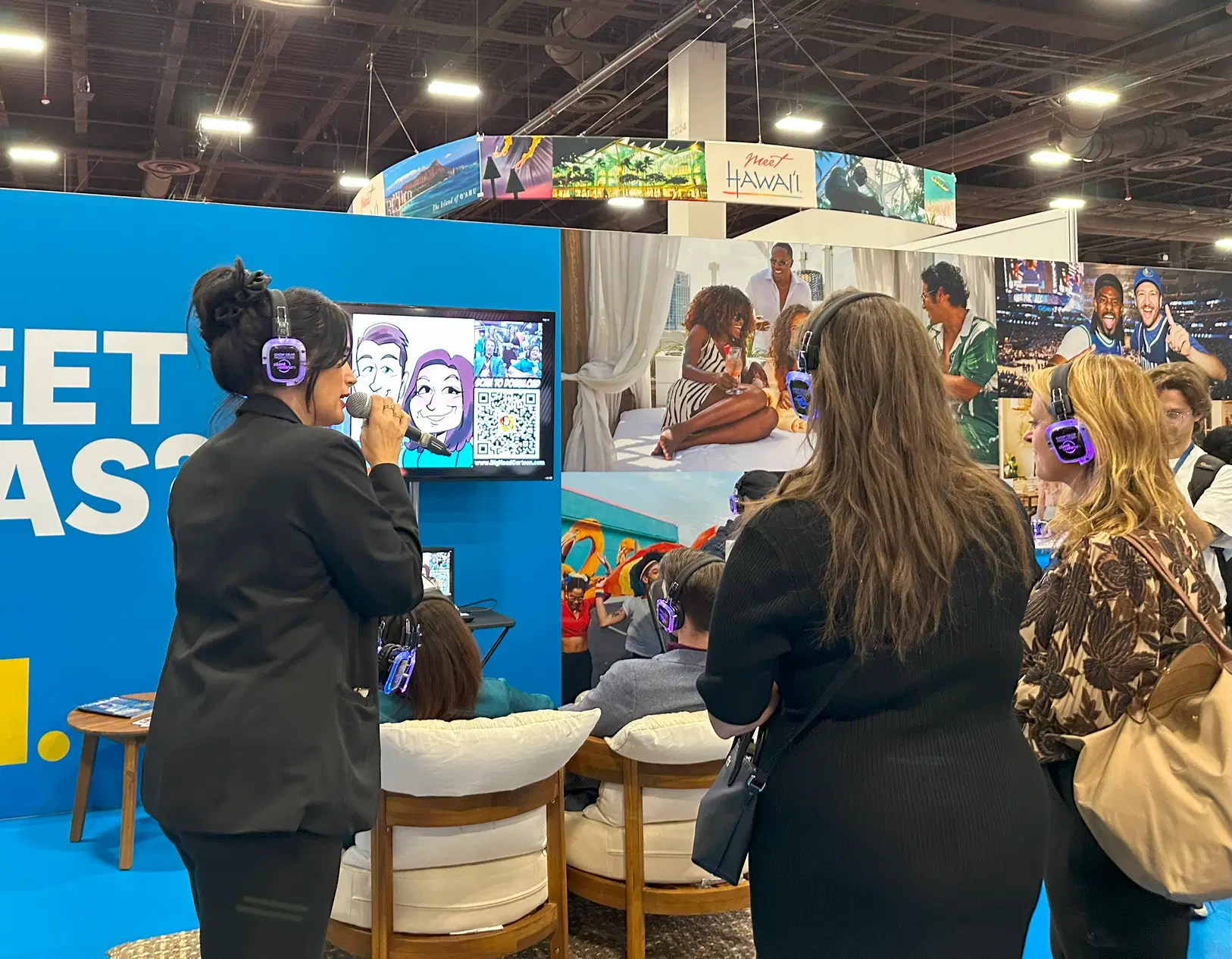
Design the activation to make useful actions observable. A personalized keepsake can create a moment that people choose to spend time with. Dwell time can be counted; a QR download can support first-party contact data capture; and branded artwork can document delivery of a sponsor touchpoint.
To make that information useful, organize it into three layers:
| Layer | What to capture | What it helps answer |
|---|---|---|
| 1. Reach | People who stopped; time spent at the activation | Did the booth earn attention? |
| 2. Engagement | Participants; conversations; keepsakes made and downloaded | Did visitors take part and connect? |
| 3. Conversion | Qualified leads; meetings booked; pipeline; closed-won | Did engagement progress toward business outcomes? |
Set your team’s definition of a qualified conversation before the show. It might include a relevant need, an appropriate role, and an agreed next step. The criteria should fit your sales process, not a generic industry benchmark.
Then calculate cost per qualified conversation using the activation spend and count of conversations that meet those criteria. Cost per item is the wrong denominator for an experience: it measures what a keepsake cost to produce, not whether the activation helped create a valuable business conversation. Track cost per item if it helps with operations, but don’t let it stand in for event activation ROI.
What to capture before, during, and after the show
Before: decide what success means
Choose the outcomes leadership wants to see, then set targets that your team can track. For example:
- 🎯 Target conversations per day: Agree on what makes a conversation qualified and how staff will record it.
- ⏱️ Target dwell: Decide how you’ll count stops and measure the time visitors spend with the activation.
- 📇 Target qualified leads: Set a goal for contacts who meet your criteria, separate from total scans or participants.
- 📲 QR and keepsake tracking: Plan how you’ll count completed downloads and connect them to any attendee data collected with clear consent.
- 🤝 Conversion tracking: Decide how your CRM will record meetings, pipeline, and closed-won business associated with the show.
Targets are planning tools, not promises. Keep each definition consistent so you can compare results across events and show what changed.
During: count the experience, not just the crowd
Use simple counters or a tracking sheet to record how many people stop, how long they stay, and how many participate. Log qualified conversations separately from casual interactions. Track keepsakes made and downloaded as distinct actions; one does not automatically equal a lead.
Make sure booth staff know where and how to record outcomes without disrupting conversations. For QR-based trade show lead capture, confirm that the form works, explains what information is collected, and makes the value exchange clear to attendees.
After: build a report that leads to a decision
A useful post event report should connect the activation plan to what happened and what your team will do next. Keep it easy to scan:
- Reach: Stops and dwell time, with the counting method noted.
- Engagement: Participants, qualified conversations, keepsakes made, and downloads.
- Conversion: Qualified leads, meetings booked, pipeline, and closed-won results as they become available.
- Investment: The event and activation costs included in your calculation.
- Learning: What to repeat, change, or test at the next show.
Separate what you observed at the show from what sales and marketing learn afterward. Pipeline and closed-won results can develop after the event, so note when the report will be updated rather than presenting early activity as final revenue.
Ask your activation vendor for a measurement handoff
Before you book, ask which data you will receive and in what format, whether your team keeps access to it and to the download records after the event, which counts are measured directly and how they are defined, and whether the report separates participants, downloads, and qualified leads.
Agree on data access and ownership in writing. Your report should be based on information your team can access, review, and use after the vendor’s work is done.
How Big Heads & Beats can support measurement
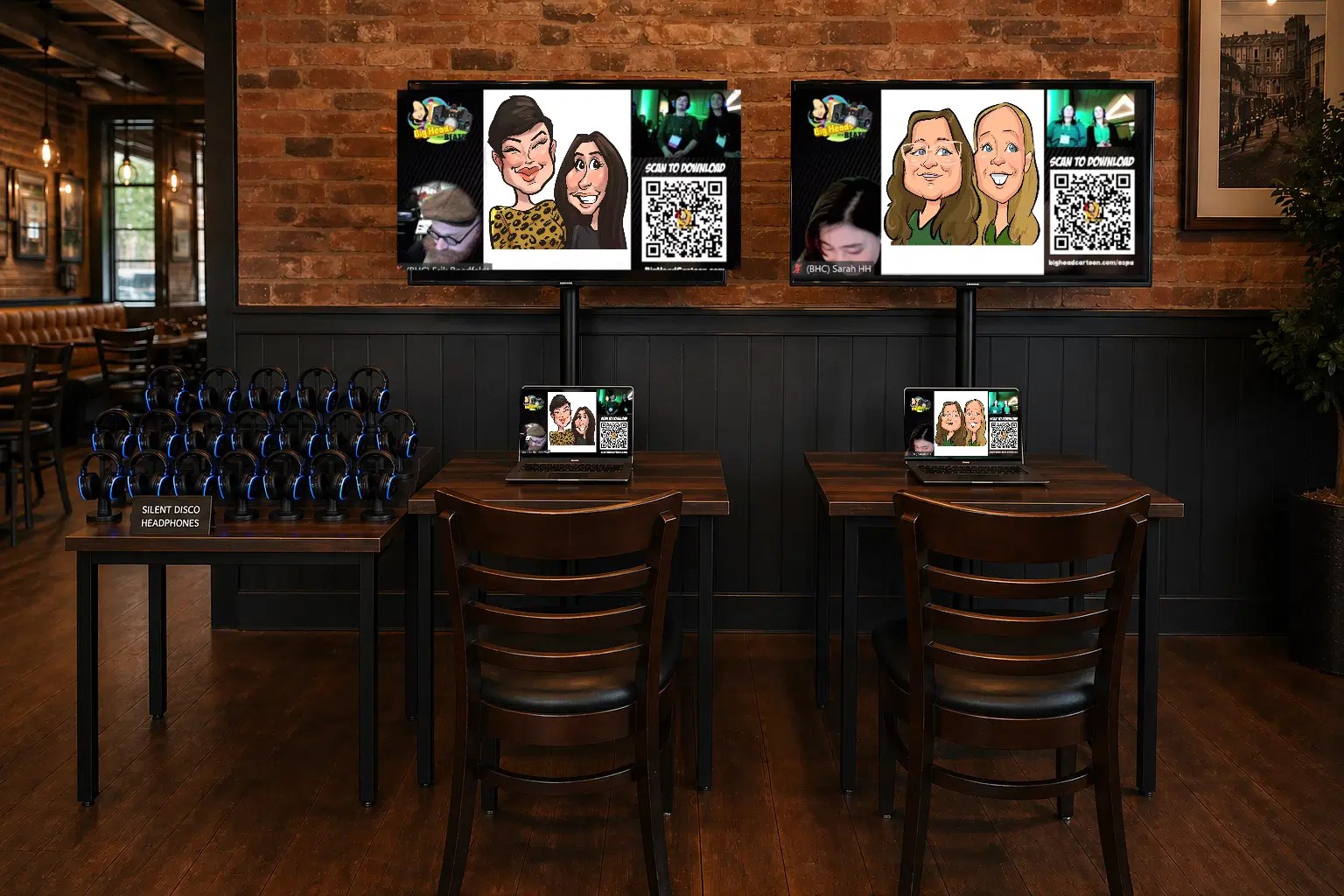
Big Heads & Beats combines live digital caricatures, music, and branded digital keepsakes in an interactive art-and-music experience. Our top digital caricature artists stream live through our software and draw guests in real time on interactive screens; the artists are never on site. The only on-site crew is the DJ, Emcee, and event staff, who handle music, energy, guest flow, and technology.
The format gives planners visible moments to count: guests stopping to watch, guests taking part, artwork created, and QR downloads. Branded artwork can also help document a sponsor deliverable. Your team still defines qualified conversations and records sales outcomes; participation alone should not be reported as a qualified lead.
The following are package documentation and planning figures, not guarantees or reported event results:
- Big Heads & Beats Tradeshow Magnet: 60–70 guests drawn per day.
- Big Heads & Beats Plug & Play: 1–10 activations at 8–10 caricatures per hour each; runs from a laptop, a TV, and an HDMI cable.
- Big Heads & Beats Party Experience: 6–10 activations, up to 100 guests drawn per hour, or 180–300 in three hours.
- Party In The Line: 2, 4, or 6+ activations, 80–120 per hour, or 300–400 per full day.
Use planning figures to discuss fit and capacity, then measure your own show against the goals you set. Explore Big Heads & Beats live activations to see the formats.

Business value: make next year’s decision easier
A thoughtful measurement plan turns a booth activation into more than a show-floor moment. It gives your team evidence to defend the budget, compare one show with another, and choose the right format for the next event. It also makes sponsor reporting clearer: when branded artwork is part of the activation, you can document that the deliverable appeared in the guest experience, then connect that proof to participation and downloads where tracked.
For a closer look at connecting a keepsake to lead capture, read Trade Show Lead Generation: How a Personalized Keepsake Turns Booth Visitors Into Qualified Leads. For other take-home ideas, see Trade Show Giveaway Ideas: The Swag Attendees Actually Keep (and Remember You For).
FAQs about trade show ROI
How do you calculate trade show ROI for a booth activation?
Start by defining which event costs and outcomes your organization will include. For activation-level comparison, divide activation spend by the number of conversations that meet your agreed qualification criteria to find cost per qualified conversation. Track meetings, pipeline, and closed-won results separately as they develop.
What trade show metrics should we report to leadership?
Report reach, engagement, and conversion: who stopped and for how long, who participated and downloaded a keepsake, and which qualified leads progressed to meetings or pipeline. Include your measurement definitions and the costs included so the numbers have context.
Can you measure dwell time at a booth?
Yes. Decide how you’ll define a stop and measure the time from a visitor’s arrival to departure, then use a consistent method throughout the show. Report the method alongside the result so leadership understands what the number represents.
What should be in a post event report?
Include targets, results by measurement layer, the method used to count them, activation costs, lead quality, and follow-up outcomes. Add clear recommendations for the next show, and label early pipeline or revenue figures as preliminary when follow-up is still underway.
Do branded digital keepsakes help with trade show lead capture?
They can give visitors a reason to engage and use a QR flow to access a personalized keepsake. To support useful lead capture, explain the information request clearly and distinguish downloads from qualified sales leads.
Planning an activation you can measure? Book a walkthrough or get a quote. Tell us about your show, goals, and booth footprint, and we’ll help you explore a format.
